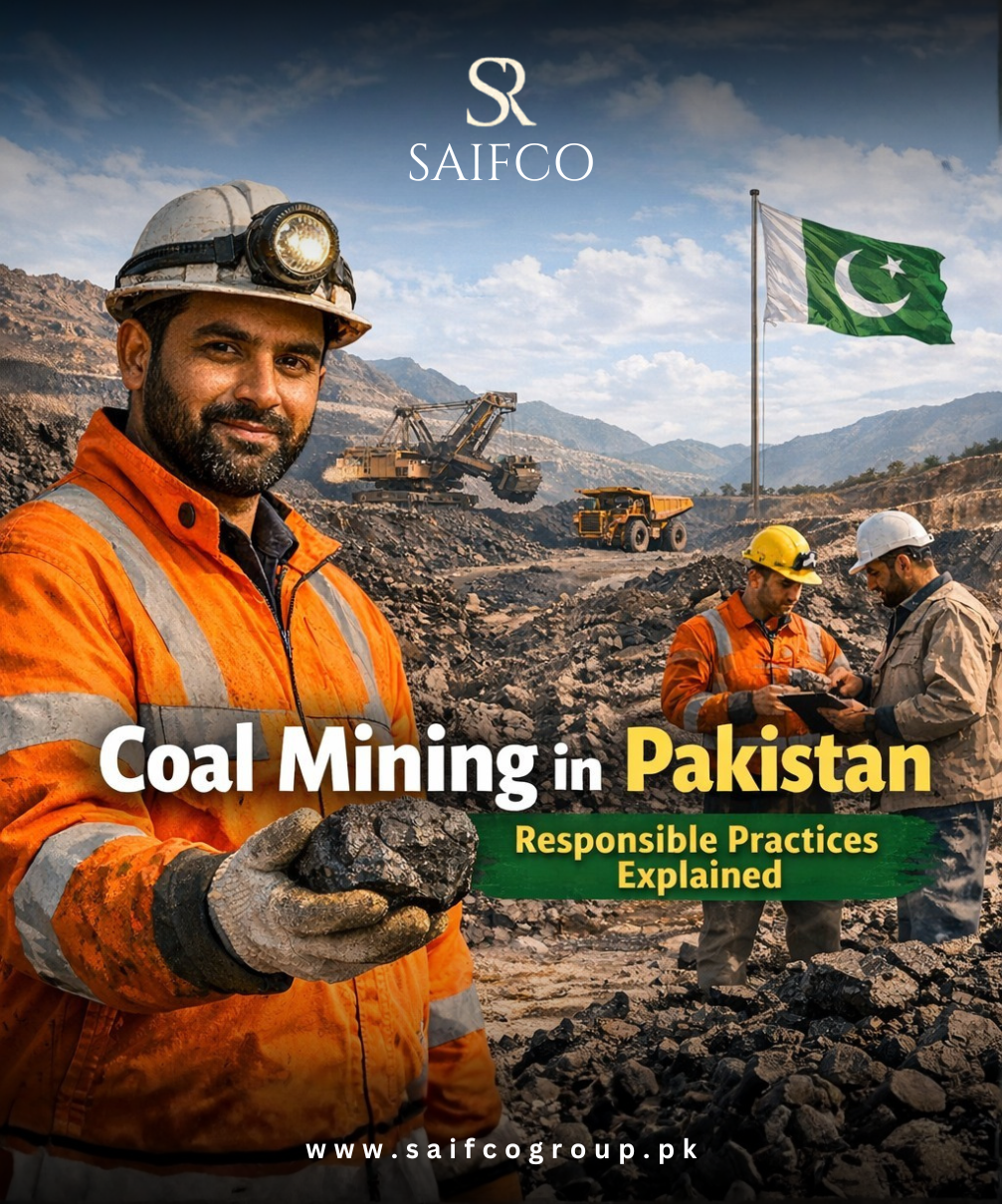
Pakistan’s coal sector holds enormous strategic importance in the country’s energy and industrial landscape. With over 3.37 billion tons of proven coal reserves, Pakistan ranks among the top 20 coal-rich countries globally. Even more striking, broader geological estimates suggest over 185 billion tons of coal resources, largely concentrated in Sindh’s Thar region.
Despite this abundance, coal mining Pakistan contributes relatively modestly to global output, producing around 19 million tons annually in recent years. At the same time, the country still relies heavily on coal imports to meet industrial demand, highlighting a gap between potential and utilization.
However, the sector faces serious challenges – particularly in worker safety, environmental impact, and regulatory enforcement. Frequent mining accidents and poor working conditions underscore the urgent need for responsible mining practices that balance economic growth with human and environmental sustainability.
Coal Mining in Khyber Pakhtunkhwa (KPK)
Coal mining in Khyber Pakhtunkhwa (KPK) plays a significant regional role in Pakistan’s mining sector, particularly in supporting local economies and small-scale industries. While not as large as Sindh’s Thar coalfields, mining in KPK is important due to its geographic spread, employment generation, and contribution to domestic energy needs.
Key Coal Mining Areas in KPK
Coal deposits in KPK are mainly found in mountainous and remote regions, where mining is often carried out through underground methods. Major coal-producing areas include:
- Hangu – One of the most active coal mining districts
- Karak – Known for small to medium-scale mining operations
- Darra Adam Khel – A historic mining area with informal operations
- Cherat and Nowshera regions – Smaller coal reserves with localized mining activity
These areas have challenging terrain and limited infrastructure, which directly impacts mining efficiency and safety.
Nature of Mining Operations
Unlike large-scale, mechanized mining seen in Thar, coal mining in KPK is largely:
- Labour-intensive
- Small to medium scale
- Privately operated or informal
Most mines rely on manual excavation techniques, with limited use of modern machinery. This increases dependence on human labour but also raises concerns about productivity and safety.
Nine Aspects of Responsible Coal Mining
Responsible mining is a comprehensive framework that ensures coal extraction is carried out safely, efficiently, legally, and sustainably. In the context of coal mining in Pakistan, these nine aspects are critical for transforming the sector into a modern and globally aligned industry.
1. Employees’ Competence
The backbone of any successful mining operation is a well-trained and competent workforce. In Pakistan, a significant portion of mining labour consists of semi-skilled or untrained workers, which increases the risk of accidents and inefficiencies.
Mining Companies Must Invest in:
- Structured training programs covering mining techniques, hazard recognition, and emergency response
- Certification systems to ensure workers meet minimum competency standards
- Continuous skill development, including refresher courses and safety drills
Additionally, supervisors and engineers should be equipped with modern technical knowledge, including geology, ventilation systems, and digital monitoring tools. A competent workforce not only improves safety but also enhances productivity and operational efficiency.
2. Mine Design and Planning
Effective mine design and planning are essential to ensure both worker safety and optimal resource extraction. Poorly designed mines can lead to collapses, gas accumulation, and inefficient coal recovery.
Responsible Mine Planning includes:
- Conducting detailed geological and geotechnical surveys before excavation
- Designing stable tunnel structures and support systems
- Planning proper ventilation systems to control methane and other hazardous gases
- Using modern software and simulation tools to predict risks and optimize layouts
In Pakistan, particularly in smaller mining regions, traditional and outdated methods are still used. Transitioning to scientific mine planning can significantly reduce operational hazards and improve output.
3. Selecting Appropriate Equipment and Proper Maintenance
The selection and maintenance of mining equipment directly impact safety, efficiency, and cost-effectiveness. Many mines in Pakistan still rely on outdated or poorly maintained machinery, which increases downtime and accident risks.
Responsible Mining Requires:
- Using modern, mechanized equipment suitable for the specific geological conditions
- Implementing preventive maintenance schedules to avoid sudden breakdowns
- Ensuring availability of spare parts and technical support
- Regular inspection and replacement of worn-out machinery
Adopting advanced equipment not only improves productivity but also minimizes manual labour risks and enhances operational precision.
4. Occupational Health and Safety
Coal mining is one of the most hazardous industries, making health and safety a top priority. In Pakistan, safety standards are often compromised due to weak enforcement and lack of awareness.
A Responsible Approach includes:
- Providing personal protective equipment (PPE) such as helmets, gloves, respirators, and safety boots
- Installing gas detection and monitoring systems to prevent explosions
- Ensuring proper ventilation systems to reduce exposure to harmful gases and dust
- Establishing emergency response plans, including rescue teams and evacuation procedures
Long-term health risks such as respiratory diseases (e.g., pneumoconiosis) must also be addressed through regular medical check-ups and monitoring programs.
5. Dimension and Time Frame
Mining operations must be carefully planned in terms of scale (dimension) and duration (time frame) to ensure sustainability and efficiency.
Key Considerations include:
- Determining the optimal size of mining operations to avoid over-extraction
- Setting realistic production targets and timelines
- Managing resource depletion rates to extend the life of the mine
- Coordinating operations to prevent environmental and structural damage
In Pakistan, lack of long-term planning often leads to resource wastage and unsafe working conditions. A structured approach ensures balanced and sustainable extraction.
6. Legal Compliance and Procedural Aspect
Legal compliance is fundamental to responsible mining. It ensures that operations are conducted within the framework of national laws, labour rights, and environmental regulations.
Responsible Mining Companies must:
- Obtain all necessary licenses and permits before operations
- Adhere to labour laws, including fair wages and working conditions
- Comply with environmental impact assessments (EIA)
- Maintain proper documentation and reporting systems
In Pakistan, enforcement gaps have historically allowed unsafe and illegal practices. Strengthening compliance not only reduces risks but also builds credibility and investor confidence.
7. Competitive Production Cost
While safety and sustainability are critical, mining operations must also remain economically viable. Competitive production costs ensure that local coal can compete with imported alternatives.
This can be Achieved Through:
- Improving operational efficiency and productivity
- Reducing waste and optimizing resource utilization
- Investing in modern technology and automation
- Streamlining supply chains and logistics
Lower costs combined with responsible practices can help Pakistan reduce its reliance on imported coal and strengthen its domestic energy sector.
8. Environment and Ecosystem Aspect
Coal mining has significant environmental impacts, making it essential to adopt eco-friendly practices.
Responsible Mining includes:
- Minimizing land degradation and deforestation
- Preventing water contamination through proper waste management
- Reducing air pollution by controlling dust and emissions
- Implementing land reclamation and rehabilitation after mining activities
In regions like Thar, where ecosystems are delicate, environmental responsibility is especially important to prevent long-term ecological damage.
9. Social Community Aspect
Mining operations are closely linked to the well-being of local communities. Responsible mining must ensure that nearby populations benefit from mining activities rather than suffer from them.
This involves:
- Creating employment opportunities for local residents
- Investing in community development projects such as schools, hospitals, and infrastructure
- Ensuring fair compensation and resettlement policies where required
- Engaging with communities through transparent communication and stakeholder participation
In areas like KPK and Balochistan, community relations are critical. Building trust and sharing benefits can lead to long-term stability and support for mining operations.
These nine aspects collectively define a holistic approach to responsible mining, ensuring that coal mining in Pakistan evolves into a sector that prioritizes people, planet, and profit equally.
Saifco Group: Leading Responsible Coal Production in Pakistan
At Saifco Group, coal mining is not just another asset – it is an integral part of our commitment to responsible resource development and sustained industrial contribution in Pakistan. Operating over 250 acres of mineral-rich land in the Darra Adam Khel region of Khyber Pakhtunkhwa, our mining division focuses on extracting and supplying premium-grade coal to meet the needs of both domestic industries and international markets.
Our approach to coal mining is shaped by a long‑term vision that balances economic value with environmental responsibility. Unlike short‑term extraction models, we invest in careful planning and quality control to ensure that coal produced under our operations meets strict standards for combustion performance and consistency. This enables industrial consumers – from manufacturers to power producers – to access reliable fuel without compromising on quality.
Key Features of our Coal Mining Efforts include:
- Strategic Resource Development: We manage our coal assets with a focus on long‑lasting output and exploration, aiming to sustain production capacity over time rather than pursue rapid depletion.
- Quality‑Driven Supply: Coal from our operations is processed and supplied to serve both local industries and export demand, contributing to Pakistan’s broader energy and manufacturing sectors.
- Sustainability and Responsible Practices: Environmental stewardship and operational responsibility are embedded in how we mine, aligning with principles of ethical extraction and long‑term land management.
- Contribution to Industrial Growth: By ensuring a dependable supply of high‑quality coal, we help support the country’s industrial base and reduce dependency on imported fuel resources.
Through these efforts, our coal mining operations exemplify the role that private sector leadership can play in strengthening Pakistan’s mining sector – not just through production volumes, but by setting benchmarks for efficiency, sustainability, and industry integrity.
Frequently Asked Questions
Modern solutions like automated mining systems, real-time gas monitoring, and high-efficiency ventilation improve safety and reduce emissions. Additionally, clean coal technologies and water recycling systems help minimize environmental impact.
Several companies are working toward responsible mining practices in Pakistan, including Saifco Group of Companies, which focuses on quality coal extraction and sustainable operations.
Environmental impact can be reduced through land reclamation, controlled blasting, dust suppression systems, and proper waste disposal. Conducting Environmental Impact Assessments (EIA) before mining is also essential.
Sustainable waste management involves recycling mining waste, safe disposal of hazardous materials, and reusing overburden for land restoration. Implementing structured waste management plans helps reduce long-term environmental damage.
Conclusion
Coal mining in Pakistan presents both a massive opportunity and a critical responsibility. With vast reserves and growing production, the sector has the potential to strengthen energy independence and economic growth.
However, without adopting responsible mining practices, the industry risks causing long-term damage to workers, communities, and the environment.
By focusing on safety, compliance, environmental protection, and community engagement, Pakistan can transform its coal sector into a sustainable and globally competitive industry.
The future of mining in KPK and across the country depends not just on how much coal is extracted- but how responsibly it is done.